Sumatran Tiger
Scientific name: Panthera tigris sumatrae
Critically Endangered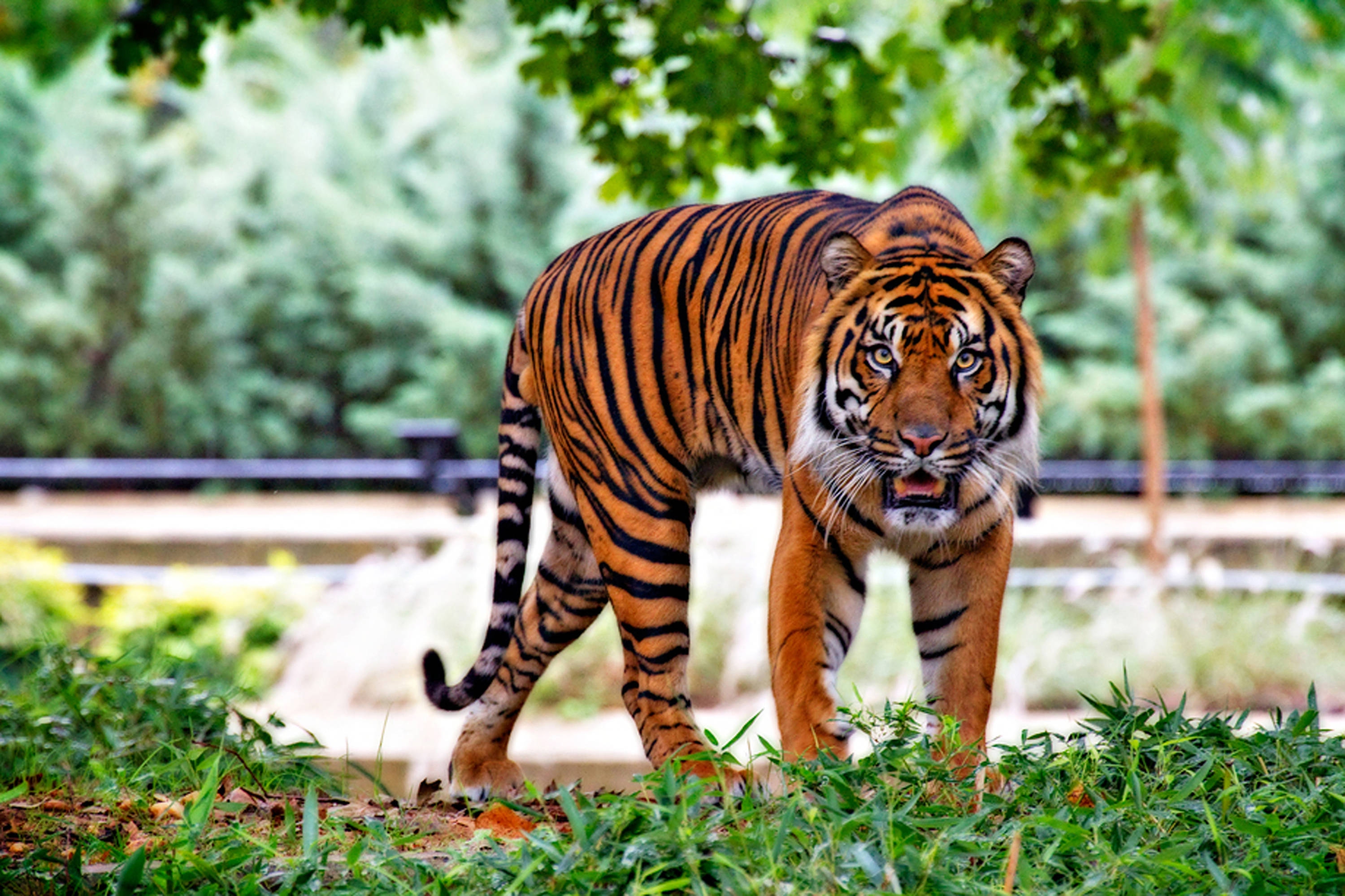
Common name: Sumatran Tiger
Scientific name: Panthera tigris sumatrae
Conservation status: Critically Endangered
Primary range: Sumatra, Indonesia
Diet: Deer, wild pigs, and other mammals
About the Sumatran Tiger
The Sumatran tiger is the smallest tiger in the world. Sumatran tigers have the darkest coats and thinnest stripes of all tigers, which help them blend into their habitat.
Sumatran tigers typically travel alone and only come together to reproduce. When they reach three or four years of age, they reach maturity and begin to mate.
Habitat and Range
The Sumatran tiger is found only on the island of Sumatra in western Indonesia. Sumatran tigers travel from lowland forests to mountain forests and live in many unprotected areas.
Currently, only 400 Sumatran tigers are living in reserves and national parks. It is believed that there are 100 more Sumatran tigers living in unprotected areas in the wild.
Habitat Characteristics:
- Peat swamps
- Swamp forests
- Tropical sub-mountain and mountain forests
Physical Characteristics
Male Sumatran tigers weigh nearly 260 pounds, while female Sumatran tigers weigh approximately 200 pounds. Each Sumatran tiger has its own unique markings, but you would have to examine them very closely to distinguish one tiger from another.
Common physical attributes:
- Thick whiskers
- Stripes are closer together than the stripes of other species
- Darker orange fur than other tigers
Diet and Behavior
Sumatran tigers are carnivorous apex predators. Typically, they hunt deer, wild pigs, fish, and macaques. Sumatran tigers hunt at night and make a large kill about once a week. Occasionally, they prey on orangutans, but not often, since orangutans spend little time on the ground.
Behavior:
- Strong swimmers
- Sleep for up to 18-20 hrs/day
Major Threats
Currently, only 600 adult Sumatran tigers remain in the wild, making them critically endangered. The continued decline in the Sumatran tiger population is caused by hunting and human-wildlife conflict.
Threats Sumatran Tigers Face:
- Poaching
- Deforestation
Conservation Efforts
Since 1997, the WildCats Conservation Alliance has funded Amur leopard and wild tiger conservation projects. The Alliance also supports other conservation organizations working to protect the Sumatran tiger, such as Lingkar Inisiatif Indonesia in South Sumatra.
Conservation Efforts That Have Been and Can Be Taken:
- Anti-poaching programs
- Conflict mitigation
Why the Sumatran Tiger Matters
Sumatran tigers help keep their respective ecosystems in balance by consuming prey. If it weren’t for this species, numerous other creatures could experience population growth and alter the habitat.
Healthy Sumatran tiger populations indicate that the environment is healthy because they are apex predators and a keystone species. Protecting Sumatran tiger populations will not only benefit the species itself but also the flora and fauna within the ecosystem.
Conservation Challenges
The increase in agricultural activities, as well as the increase in the human population, is destroying more tiger habitats every year. Humans hunt Sumatran tigers for their teeth, skin, and bones and sell them on the black market despite strict laws prohibiting this practice.
Challenges They Face:
- Habitat loss
- Conflict with locals