Black Rhino
Scientific name: Diceros bicornis
Critically Endangered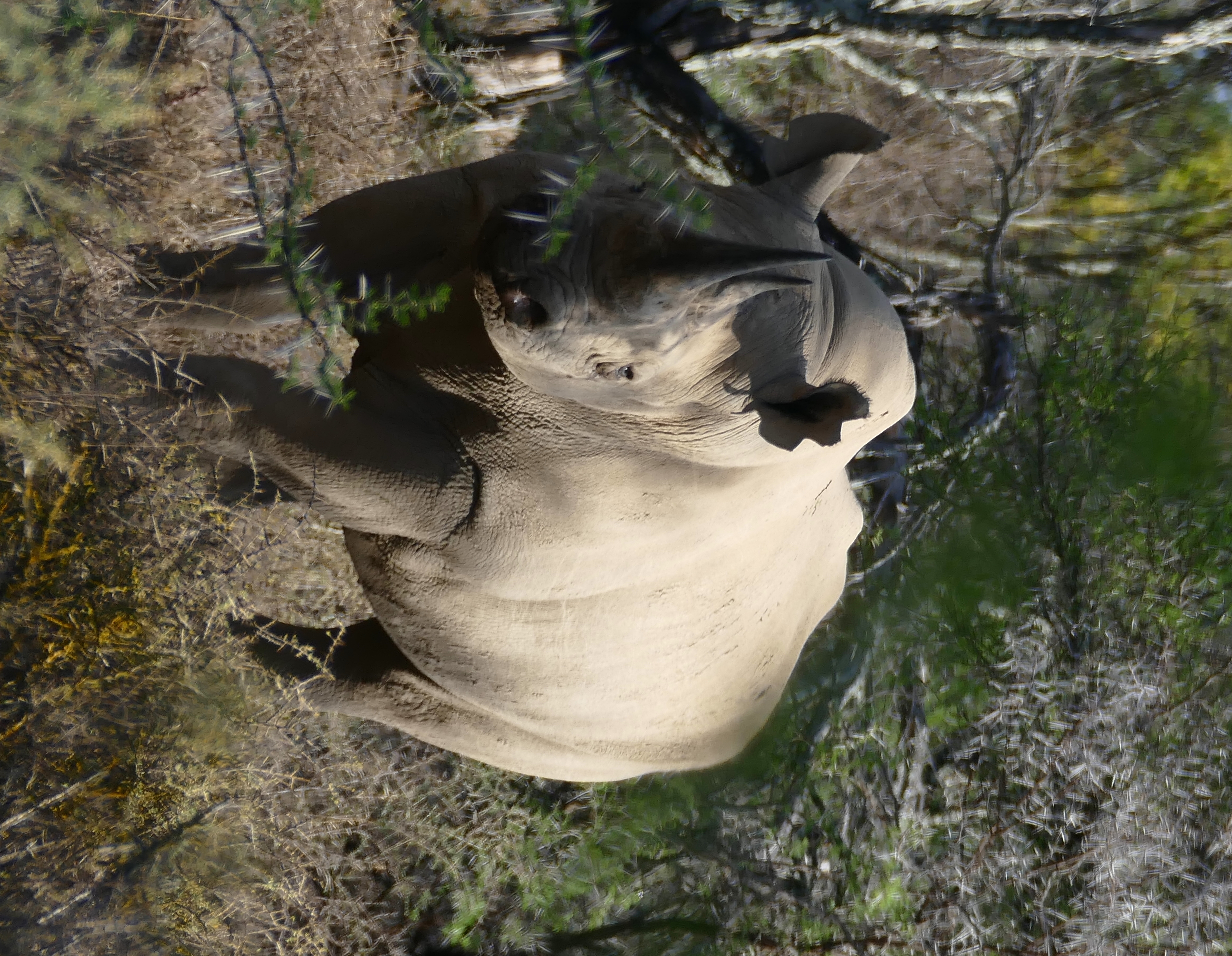
Common name: Black Rhino
Scientific name: Diceros bicornis
Conservation status: Critically Endangered
Primary range: Eastern and southern Africa
Diet: Herbivorous
About the Black Rhino
Black rhinos, once scattered across large regions of sub-Saharan Africa, now inhabit small areas of East and Southern Africa. They are primarily found in deserts and montane forests.
Black rhinos have a strong sense of smell and hearing but cannot see very well. Their poor eyesight causes them to charge at objects like trees and rocks because they mistake them for threats. It is also very common for black rhinos to charge at anything unfamiliar as soon as they catch its scent.
Habitat and Range
Throughout southern and eastern Africa, black rhinos can be found. Some countries where they can be seen include Kenya, Tanzania, Namibia, South Africa, and Zimbabwe.
As long as there is enough food and water in an area, black rhinos will reside there. This allows them to inhabit a vast range of habitats across Africa.
Habitat Characteristics:
- Has a healthy supply of shrubs and woody plant-life
- There’s a water source and mineral licks nearby
- Semi-desert savannah
- Woodlands
- Forests
- Wetlands
Physical Characteristics
Smaller than white rhinos, black rhinos range from 4.5 to 6 feet in height and weigh 1,760 to 3,080 pounds. Black rhinos have two horns. Males typically have thicker horns, while females typically have longer, thinner horns.
Common physical attributes:
- Dark grey color
- Only has hair on its ears, tail tip, and eyelashes
- The front horn, which is usually around 19 to 20 inches long, is longer than the back horn
Diet and Behavior
Trees, bushes, and shrubs make up a large part of a black rhino’s diet, making them browsers. Black rhinos consume roughly 200 different species of plants and also enjoy salt licks as part of their diet.
Behavior:
- Can be active during the day and night, but are least active during the hottest parts of the day
- When they bite off woody plant parts, they tend to leave a pruning-shear-type edge due to the shape of their hooked lip
- Eat leafy plants, shoots, thorny wood bushes, and fruit
Major Threats
Poaching has long been a threat to black rhinos. The 19th century was a time when black rhinos were hunted across most of Africa, causing their population to decrease from several hundred thousand to 65,000 by 1970. The number of black rhinos further decreased between 1970 and 1992, with total numbers sinking as low as 2,400.
Threats Black Rhinos Face:
- Climate change
- Habitat loss
- Illegal wildlife trade
- Urban sprawl
Conservation Efforts
In 1995, fewer than 2,500 black rhinos remained on Earth. Since then, the black rhino population has doubled due to numerous conservation efforts. However, black rhinos are still classified as critically endangered to this day.
Conservation Efforts That Have Been and Can Be Taken:
- Investing in local communities to help combat poaching
- Creating safe havens for black rhinos
- Reintroducing rhinos to historic habitats
Why the Black Rhino Matters
Black rhinos are significant contributors to their ecosystems in various ways. For example, they keep water holes open and distribute nutrient-rich soil by regularly wallowing in mud.
Protecting black rhinos also helps elephants, as they inhabit parts of the large territories where black rhinos live and roam. Because black rhinos are among the most popular animals to see on safari tours, they also benefit the economy through ecotourism.
Conservation Challenges
Due to their territorial nature, black rhinos become agitated when they have limited space. This can lead to slow population growth and increased vulnerability to disease.
Challenges They Face:
- Poaching
- Habitat loss
- Habitat fragmentation