Hawksbill Sea Turtle
Scientific name: Eretmochelys imbricata
Critically Endangered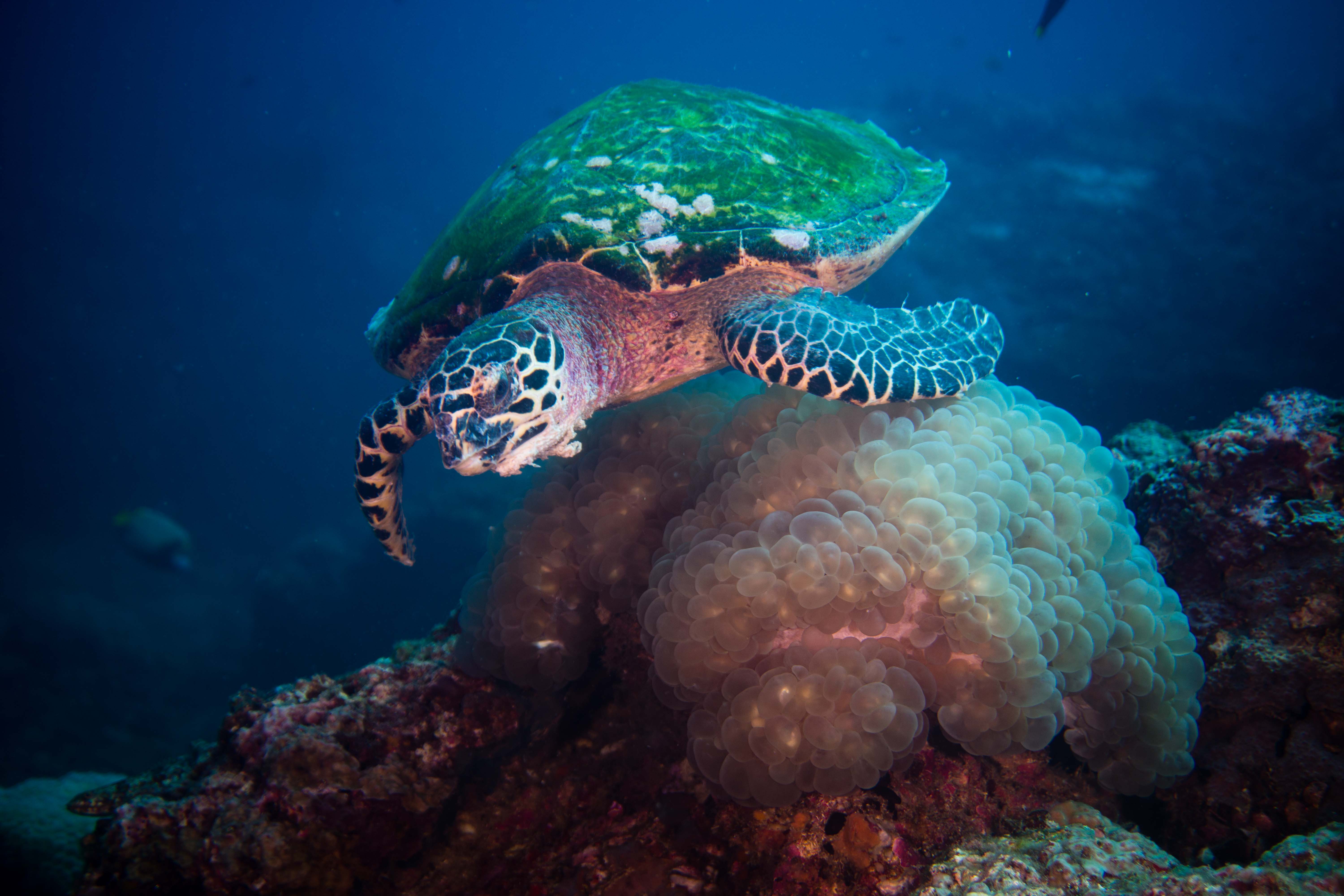
Common name: Hawksbill Sea Turtle
Scientific name: Eretmochelys imbricata
Conservation status: Critically Endangered
Primary range: Tropical and subtropical oceans worldwide
Diet: Sponges, jellyfish, algae, and other marine organisms
About the Hawksbill Sea Turtle
The hawksbill sea turtle’s name comes from its mouth, which resembles the beak of a hawk. These very unique creatures are the only species of sea turtle that can survive on a diet consisting primarily of sponges.
Unknown to many, sea turtles are part of a reptilian group that has existed on Earth for the past 100 million years. Hawksbill sea turtles are an essential part of marine ecosystems and help maintain the health of coral reefs and seagrass beds.
Habitat and Range
In tropical areas throughout the world, hawksbill sea turtles inhabit oceans, seas, and associated waters. In North American waters, hawksbill sea turtles are most commonly found near Puerto Rico, the U.S. Virgin Islands, and off the coasts of Texas and southern Florida.
Hawksbill sea turtles nest on undisturbed beaches. Their typical nesting sites are sandy beaches with woody vegetation near the waterline.
Habitat Characteristics:
- Coral reefs
- Rocky areas
- Lagoons
- Shallow, coast areas
Physical Characteristics
Hawksbill sea turtles can grow up to 2 to 3 feet in shell length and weigh between 100 and 150 pounds. Young hawksbill sea turtles are only 2 to 3 inches long and are mostly brown in color.
Common physical attributes:
- Mottled shells consisting of an irregular combination of shades of amber, orange, red, yellow, black, and brown
- Shells have serrated edges with overlapping scutes
- V-shaped lower jaw
Diet and Behavior
Plants and other animals are part of a hawksbill sea turtle’s diet, making them omnivorous. Hawksbill sea turtles mainly eat sponges, but they also eat marine algae, corals, and mollusks.
Behavior:
- Can migrate long distances between foraging areas and nesting beaches
- Typically develops nests near or under vegetation
Major Threats
Hawksbill sea turtles face many threats as a critically endangered species. Habitat loss caused by rising sea levels and human activity has significantly contributed to the decline of hawksbill sea turtle populations.
Threats Hawksbill Sea Turtles Face:
- Predation of eggs and hatchlings
- Changing environmental conditions
- Development of nesting beaches
Conservation Efforts
International treaties and national laws are part of the conservation efforts to protect hawksbill sea turtles. Organizations are implementing changes such as modifying fishing gear, altering fishing practices, and closing certain areas during the nesting season.
Conservation Efforts That Have Been and Can Be Taken:
- Eliminating bycatch
- Addressing the wildlife trade
- Working with partners to protect sea turtles and their habitats
Why the Hawksbill Sea Turtle Matters
By consuming sponges, hawksbill sea turtles provide better access for reef fish to feed. This helps preserve the balance of coral reefs, which are also in danger of extinction.
Hawksbill sea turtles also help boost economic revenue. Visitors who come to admire and observe the turtles provide a major source of income for local residents in the Coral Triangle.
Conservation Challenges
Coral reefs provide food and shelter for hawksbill sea turtles, and when coral reefs are threatened, hawksbill populations are affected as well. Currently, evidence shows that global climate change is contributing to the destruction of coral reefs by causing coral diseases, which can wipe out entire coral reef communities.
Challenges They Face:
- Illegal wildlife trade
- Vessel strikes