Sumatran Orangutan
Scientific name: Pongo abelii
Critically Endangered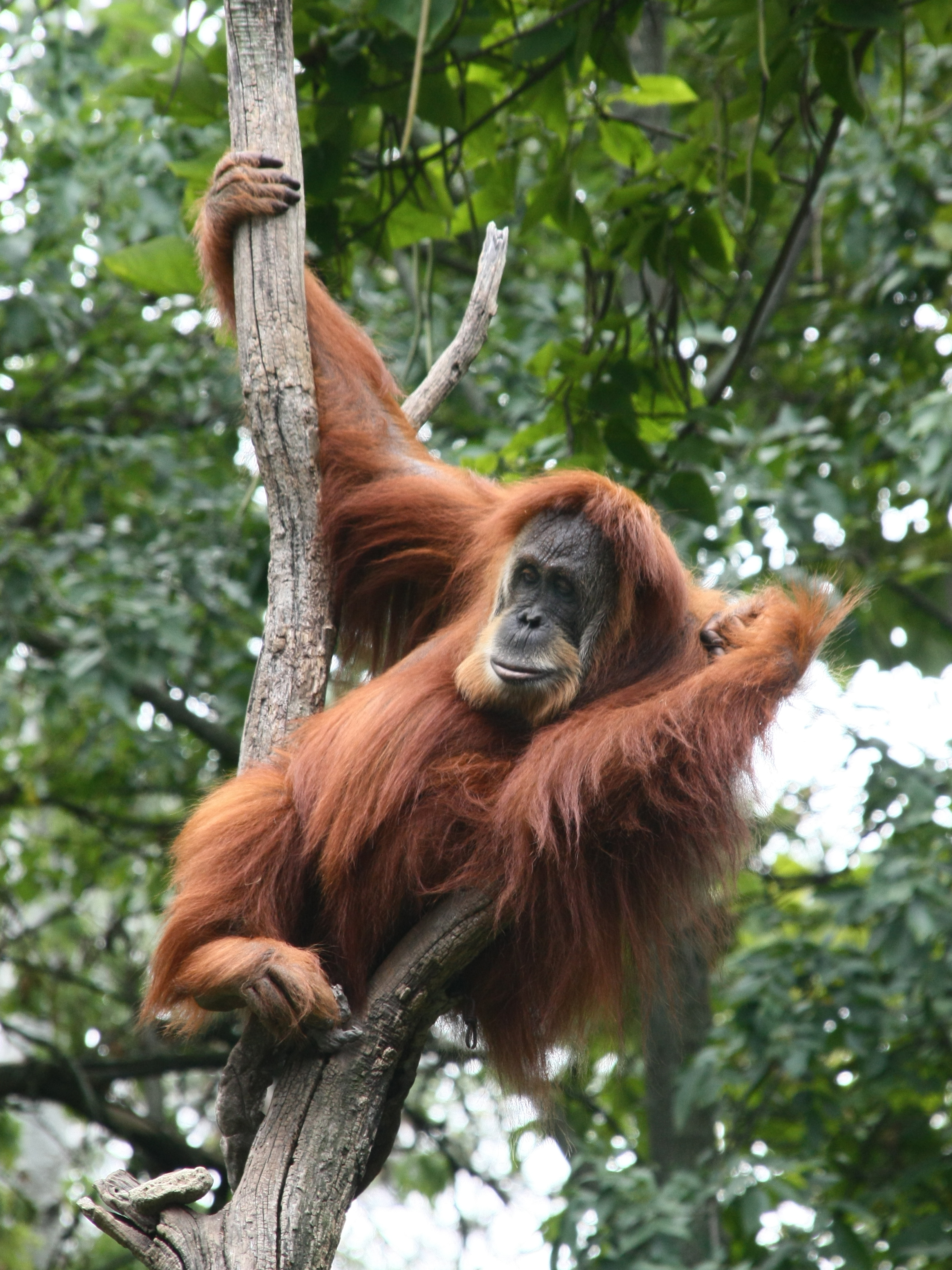
Common name: Sumatran Orangutan
Scientific name: Pongo abelii
Conservation status: Critically Endangered
Primary range: Sumatra, Indonesia
Diet: Fruit, leaves, bark, insects, and other plant material
About the Sumatran Orangutan
Sumatran orangutans primarily live in trees in tropical rainforests. Adult males typically live alone, while females generally travel with their young.
As a critically endangered species, only seven of the nine existing Sumatran orangutan populations have the potential for long-term viability. In addition, only three of those nine populations currently contain more than 1,000 orangutans.
Habitat and Range
In the past, Sumatran orangutans were found across the entire island of Sumatra and as far south as Java. Today, the species is found only in the provinces of North Sumatra and Aceh.
Sumatran orangutans do not live at high elevations. Instead, they are typically found at elevations of 650 to 1,300 feet above sea level. They also tend to be less tolerant of habitat disturbance than their cousins, the Bornean orangutans.
Habitat Characteristics:
- Lakes
- Rivers
- Rainforests
Physical Characteristics
Sumatran orangutans are quadrumanous, meaning they have feet that are shaped like their hands. This feature also means they have opposable toes as well as opposable thumbs. In addition, Sumatran orangutans have long, orange fur on their bodies, as well as a bit of a potbelly.
Common physical attributes:
- Slender build
- Long beards
- Feet shaped similarly to their hands
Diet and Behavior
Although they mainly consume fruit, Sumatran orangutans also eat leaves, seeds, and flowers. On occasion, they have also been known to hunt and eat slow lorises.
Behavior:
- Make new nests each day to sleep in
- Diurnal
- Use large leaves as “umbrellas” to protect themselves from rain
Major Threats
Research has shown that the Sumatran orangutan population could decline by 81% from 1985 levels by 2060. Poaching, habitat loss, and habitat fragmentation are the primary drivers of this massive decline in the species’ population.
Threats Sumatran Orangutans Face:
- Logging
- Road Building
Conservation Efforts
The World Wildlife Fund works with the global wildlife trade monitoring network known as TRAFFIC to help prevent the illegal trade of live animals and orangutan products. WWF also works with Indonesian organizations to reduce human-orangutan conflict near palm oil plantations.
Conservation Efforts That Have Been and Can Be Taken:
- Mitigating human-orangutan conflict
- Fighting wildlife conflict
- Saving orangutan forests
Why the Sumatran Orangutan Matters
Sumatran orangutans play a substantial role in seed dispersal. The disappearance of this species would disrupt the growth of several tree species.
Protecting the habitat of Sumatran orangutans would benefit not only the orangutans themselves but also humans. The rivers and streams that flow through the forests where orangutans live provide local communities with drinking water, water for cooking, and water for hydroelectric power.
Conservation Challenges
Orangutans have been legally protected in Indonesia since 1931, but unfortunately, they are still captured in the wild and kept in households as status symbols. The lack of effective law enforcement against illegal trafficking is believed to pose a significant threat to orangutans.
Challenges They Face:
- Hunting
- Mining
- Agriculture