Mountain Gorilla
Scientific name: Gorilla beringei beringei
Critically Endangered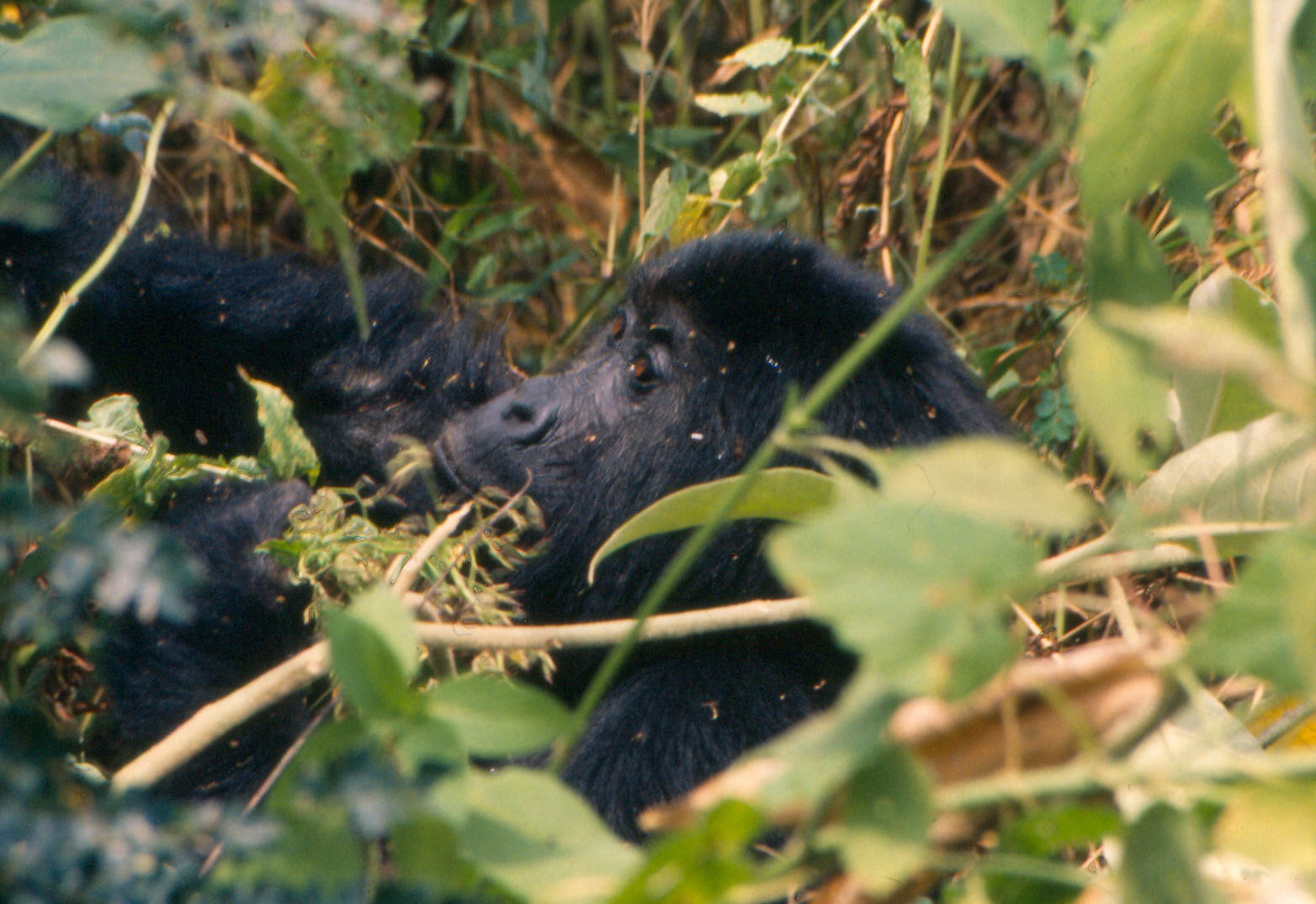
Common name: Mountain Gorilla
Scientific name: Gorilla beringei beringei
Conservation status: Critically Endangered
Primary range: Mountain forests of Rwanda, Uganda, and the Democratic Republic of the Congo
Diet: Leaves, stems, shoots, fruits, roots, and other vegetation
About the Mountain Gorilla
Mountain gorillas live in two isolated groups in east-central Africa—one in the Virunga Volcanoes and the other in Bwindi Impenetrable National Park in Uganda. In total, there are approximately 1,063 mountain gorillas remaining in the wild, which gives them the status of being critically endangered.
Humans share nearly 98% of their DNA with gorillas, meaning that exposure to human illnesses can have a significant impact on them, especially because they have not developed the necessary immunities. Gorillas differ in weight, however, with males weighing nearly 400 pounds and females weighing nearly 200 pounds.
Habitat and Range
Native to a small region in Central Africa, mountain gorillas can be found in Rwanda, Uganda, and the Democratic Republic of the Congo. The range of the entire mountain gorilla population is approximately the size of New York City.
Mountain gorillas typically inhabit forests at elevations as high as 14,764 feet, where fruit-bearing trees are scarce. In addition, mountain gorillas have been observed living in bamboo forests, woody shrubs, and subalpine forests with spreading canopies.
Habitat Characteristics:
- High-elevation montane forests
- Dense ground cover vegetation
Physical Characteristics
Adult male mountain gorillas weigh almost twice as much as females and have noticeable differences in appearance. Males also have distinct characteristics, such as large bony eye sockets, enlarged jaws, and large canines, that distinguish them from female mountain gorillas.
Common physical attributes:
- Long, coarse, dark black hair
- Opposable thumbs
- Forward-facing eyes
Diet and Behavior
As herbivores, mountain gorillas consume leafy vegetation, woody plants, and roots. Mountain gorillas are also known to eat ants, bees, earthworms, and dirt for essential nutrients.
Behavior:
- Diurnal
- Walk on their knuckles
Major Threats
Unstable governments can lead to conservation efforts being deprioritized, causing impoverished people to rely on natural resources for survival. The resulting domino effect contributes to the shrinking of mountain gorillas’ habitat due to deforestation for firewood, hunting wildlife for food, and clearing land for farming.
Threats Mountain Gorillas Face:
- Forest degradation
- Political instability
- Human encroachment
Conservation Efforts
National and international laws that prohibit the trade and killing of mountain gorillas have been implemented to protect them. Organizations have also worked closely with countries to protect mountain gorillas and their habitat.
Conservation Efforts That Have Been and Can Be Taken:
- Engage local communities
- Support ongoing monitoring and research
- Providing vital veterinary care
Why the Mountain Gorilla Matters
When mountain gorillas eat large amounts of fast-growing shrubs and grasses on the forest floor, they help regulate plant growth and maintain a diverse, healthy plant community. They also help their ecosystem by distributing seeds throughout the area.
In addition, mountain gorillas help maintain the natural balance of the food chain through grazing, which in turn benefits other wildlife that live in the habitat. Mountain gorillas also help humans by providing a vital source of income for local communities through ecotourism.
Conservation Challenges
A lot of strain has been put on mountain gorillas and their environment. In order to accommodate more people and gather natural resources like wood for fuel, mountain gorillas habitat has been significantly reduced.
Challenges They Face:
- Mining
- Habitat loss
- Climate change