Sea Otter
Scientific name: Enhydra lutris
Endangered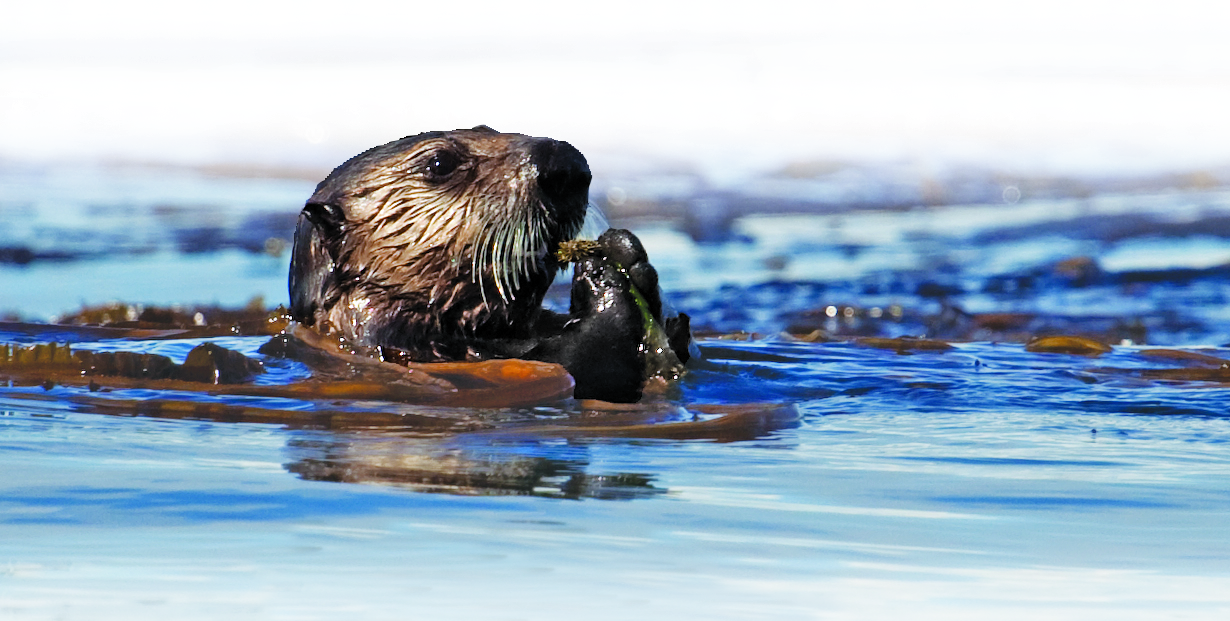
Common name: Sea Otter
Scientific name: Enhydra lutris
Conservation status: Endangered
Primary range: Coastal waters of the northern Pacific Ocean
Diet: Sea urchins, crabs, clams, mussels, and other marine invertebrates
About the Sea Otter
Part of the weasel family, sea otters are known to have webbed feet and waterproof fur that keeps them dry. Sea otters have a tendency to float at the water’s surface in kelp and wrap themselves up to keep from moving in the waves of the sea.
Sea otters are the only otters that give birth in the water. Mother sea otters quickly teach their young to swim and hunt for themselves.
Habitat and Range
Sea otters can be found along the coasts of the Pacific Ocean in North America and Asia. Previously, sea otters were found from Mexico to Alaska, but their populations have been reduced due to hunting and oil spills.
Today, the sea otter population in California ranges from Half Moon Bay to Point Conception. In addition, there are even larger sea otter populations in Alaska, as well as sea otter populations in Russia.
Habitat Characteristics:
- Kelp forests
- Harbors
- Shallow waters near the shores of sandy beaches
Physical Characteristics
Sea otters are stockier and have bigger ribcages than other otter species, yet they are still very flexible, to the point where they can groom almost every inch of their fur. Also, sea otters have small forefeet with retractable claws that are used for grooming, finding food, and eating.
Common physical attributes:
- World’s densest fur
- Shades of brown fur
- Nostrils and ears that close in the water
- Webbed feet
Diet and Behavior
The specific foods that a sea otter eats vary, but they mainly consume marine invertebrates. Sea otters typically eat sea urchins, mussels, crabs, clams, and fish, as well as snails and other gastropods.
Behavior:
- Hunts on the seafloor
- Returns to the surface to eat
- Using their chest as a table to eat
Major Threats
Sea otters were once scattered across the Earth, from California to Russia, but in the 1700s and 1800s, hunters and fur traders devastated their population. The sea otter population decreased so much that they were thought to be extinct.
Threats Sea Otters Face:
- Oil spills
- Food availability
- Disease
Conservation Efforts
The sea otter population was nearly eradicated by hunting in the 1900s, but today, conservation efforts are being made to reverse this decline. California’s sea otter population has increased from just 50 individuals to nearly 2,800 today, thanks to these efforts.
Conservation Efforts That Have Been and Can Be Taken:
- Decrease oil consumption
- Dispose of hazardous waste properly
- Support legislation efforts that improve wetlands
Why the Sea Otter Matters
Kelp forests play a huge role in sequestering atmospheric carbon. Healthy kelp can absorb vast amounts of CO₂ from the atmosphere, and kelp forests can store up to 20 times more carbon per acre than forests on land.
This means that the loss of kelp can have major consequences for atmospheric carbon levels. By consuming creatures that eat large amounts of kelp, sea otters help preserve kelp forests, which in turn helps combat climate change.
Conservation Challenges
The sea otter population still faces many challenges to its growth, even though some progress has been made. Shark bites and human activity have disrupted the sea otter population and put them at risk of losing energy and dying.
Challenges They Face:
- Shark bites
- Human disturbances
Sources
National Geographic Kids — Sea Otter
The Marine Mammal Center — Learn More About Sea Otters
SeaWorld — All About Otters Physical Characteristics
Sea Otter Foundation & Trust — The Diet of a Sea Otter: What Sea Otters Eat and Why It Matters
Monterey Bay Aquarium — Sea Otter
Monterey Bay Aquarium — These are the greatest threats facing sea otters today