Red Panda
Scientific name: Ailurus fulgens
Endangered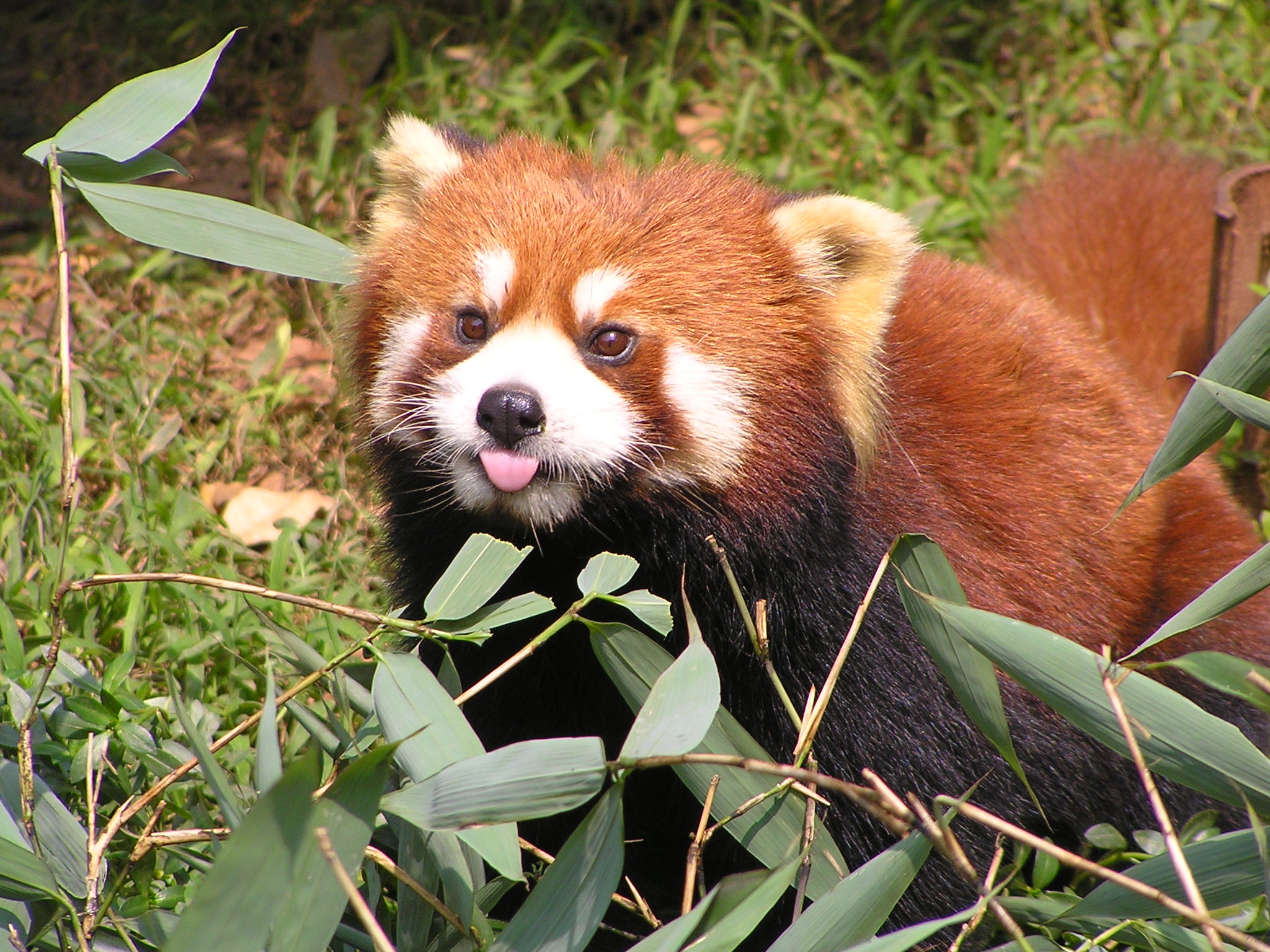
Common name: Red Panda
Scientific name: Ailurus fulgens
Conservation status: Endangered
Primary range: Eastern Himalayas and southwestern China
Diet: Bamboo, leaves, fruit, insects, eggs, and small animals
About the Red Panda
The red panda is an animal that spends the majority of its time in trees in the mountains of Nepal, Myanmar, and central China. Red pandas have adapted so well to living in trees that they are known for their acrobatic skills.
In addition, red pandas have a thumb-like wrist bone that enables them to get an extra grip when climbing, as well as a tail that helps them keep their balance. Hanging out in trees also helps red pandas avoid predators like snow leopards.
Habitat and Range
Areas with plenty of tree cover are where red pandas tend to reside. These regions consist mainly of temperate broadleaf forests with bamboo understories that range from 7,800 to 12,800 feet in elevation.
Red pandas can be found in the high-altitude forests of Nepal, Bhutan, India, China, and Myanmar on the southern side of the Himalayas. It is estimated that the total potential habitat for red pandas is approximately 87,000 square miles.
Habitat Characteristics:
- Temperate broadleaved forests
- Mixed forests with bamboo understories
Physical Characteristics
A red panda’s coat provides camouflage among the red-brown moss and white lichen on the trees where it resides. Red pandas have a soft undercoat covered by long guard hairs, along with a long, bushy tail and large, pointed ears.
Common physical attributes:
- Reddish coats
- White face markings
- Large, round heads
- Short snouts
Diet and Behavior
Like giant pandas, bamboo makes up a huge part of a red panda’s diet. In addition, red pandas are known to consume roots, succulent grasses, fruits, insects, and grubs.
Behavior:
- Solitary
- Crepuscular
Major Threats
Due to the many threats red pandas face, the World Wildlife Fund estimates that fewer than 10,000 remain in the wild. Red panda populations are estimated to have declined by 40% over the past two decades, and the species is now classified as endangered.
Threats Red Pandas Face:
- Poaching
- Climate change
- Hunting
Conservation Efforts
Currently, China has 46 protected areas that provide habitat for red pandas, while India has approximately 19, Bhutan has five, and Myanmar has three. In addition, organizations such as the World Wildlife Fund and the Red Panda Network are working to protect red pandas and their habitats.
Conservation Efforts That Have Been and Can Be Taken:
- Monitoring red panda populations
- Spreading awareness
- Taking part in ecotourism
Why the Red Panda Matters
Protecting the red panda helps protect its entire ecosystem, which includes species such as the pangolin and the Himalayan black bear. Red pandas are an umbrella species for the Eastern Himalayan Broadleaf Ecosystem, one of the most biodiverse places on the planet.
Since red pandas live in trees, protecting their habitat also means protecting the trees they depend on. Protecting trees helps the planet by improving air quality, supporting cleaner oceans, and reducing runoff.
Conservation Challenges
The red panda’s habitat continues to shrink due to farming, mining, and housing development. People clear forests for these activities and allow livestock to graze in areas where they compete with red pandas for bamboo.
Challenges They Face:
- Landslides
- Rainfall
- Commercial development