Pangolin
Scientific name: Manis species
Endangered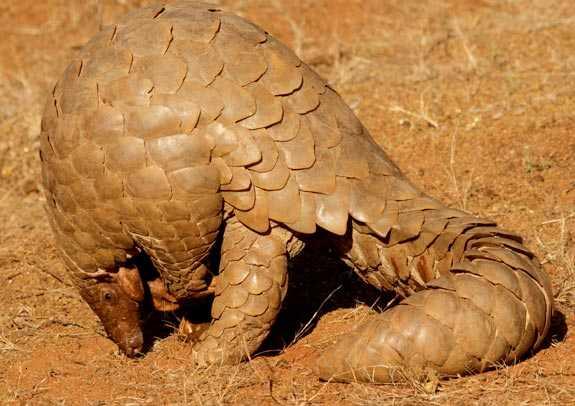
Common name: Pangolin
Scientific name: Manis species
Conservation status: Endangered
Primary range: Africa and Asia
Diet: Ants, termites, and other insects
About the Pangolin
Pangolins are solitary animals that have a full covering of scales on their bodies. When startled, pangolins will cover their heads with their front legs, exposing their scales to any nearby predators. Pangolins will completely curl up into a ball when touched or grabbed, while the scales on their tails can be used to lash out.
Pangolins are the most trafficked mammals in the world for their meat and scales. As of now, eight species of pangolin are recognized by the International Union for Conservation of Nature, and they range from vulnerable to critically endangered.
Habitat and Range
Pangolins live in a variety of habitats, including primary and secondary forests, mangroves, and agricultural fields. However, pangolins thrive best in primary forests due to the abundance of old, hollow trees, ant nests, termite mounds, and fresh water, as well as the lack of human activity.
Pangolins have difficulty surviving outside their natural habitats, and therefore, few successful efforts have been made to raise them in captivity. This has resulted in limited information about pangolins beyond what has already been documented.
Habitat Characteristics:
- Savannah grasslands
- Tropical forests
- Thick brush
Physical Characteristics
Known as scaly anteaters, pangolins are distinguished by their scales, which are their most defining physical characteristic. Juvenile pangolins have pale, soft scales that harden the day after birth, while adult pangolins have scales that range in color from brown to yellow.
Common physical attributes:
- Brown and yellow scales
- Asian pangolins have thick hairs between their scales
Diet and Behavior
The pangolin’s diet consists of ants, termites, bee larvae, and other insects. A pangolin’s stomach is lined with keratin spines that help crush its food because pangolins cannot chew.
Behavior:
- Dig large burrows that they use for sleeping and mating
- Nocturnal
- Solitary
Major Threats
Over one million pangolins have been poached for commercial use over the past decade. Pangolin poaching is so widespread that studies conducted in 2019 suggest that one pangolin is poached every three to five minutes worldwide.
Threats Pangolins Face:
- Poaching
- Hunting
Conservation Efforts
Many legislative measures have been taken to protect pangolins, but they have largely been unsuccessful. Despite these efforts, pangolins continue to be hunted, and the demand for pangolin meat and scales continues to grow each year.
Conservation Efforts That Have Been and Can Be Taken:
- Community outreach programs that advise against the hunting and poaching of pangolins
- Sniffer dogs intercepting illegal pangolin trafficking
Why the Pangolin Matters
Pangolins help maintain balance in the ecosystem and control insect populations through the immense number of insects they consume each day. They are believed to eat around 70 million insects per year, which is nearly 200,000 insects per day.
The burrows that pangolins dig help prevent the buildup of compacted soil and contribute to the growth of healthy plant life. These same burrows also provide shelter for other species when pangolins leave them behind.
Conservation Challenges
It has been quite difficult to preserve the pangolin population due to a lack of governmental transparency and the legal resources necessary to curb illegal trafficking. What makes matters worse is that pangolins are easy targets for poachers because they become immobile when frightened.
Challenges They Face:
- Human agriculture
- Transportation corridors
- Climate change