Kakapo
Scientific name: Strigops habroptilus
Critically Endangered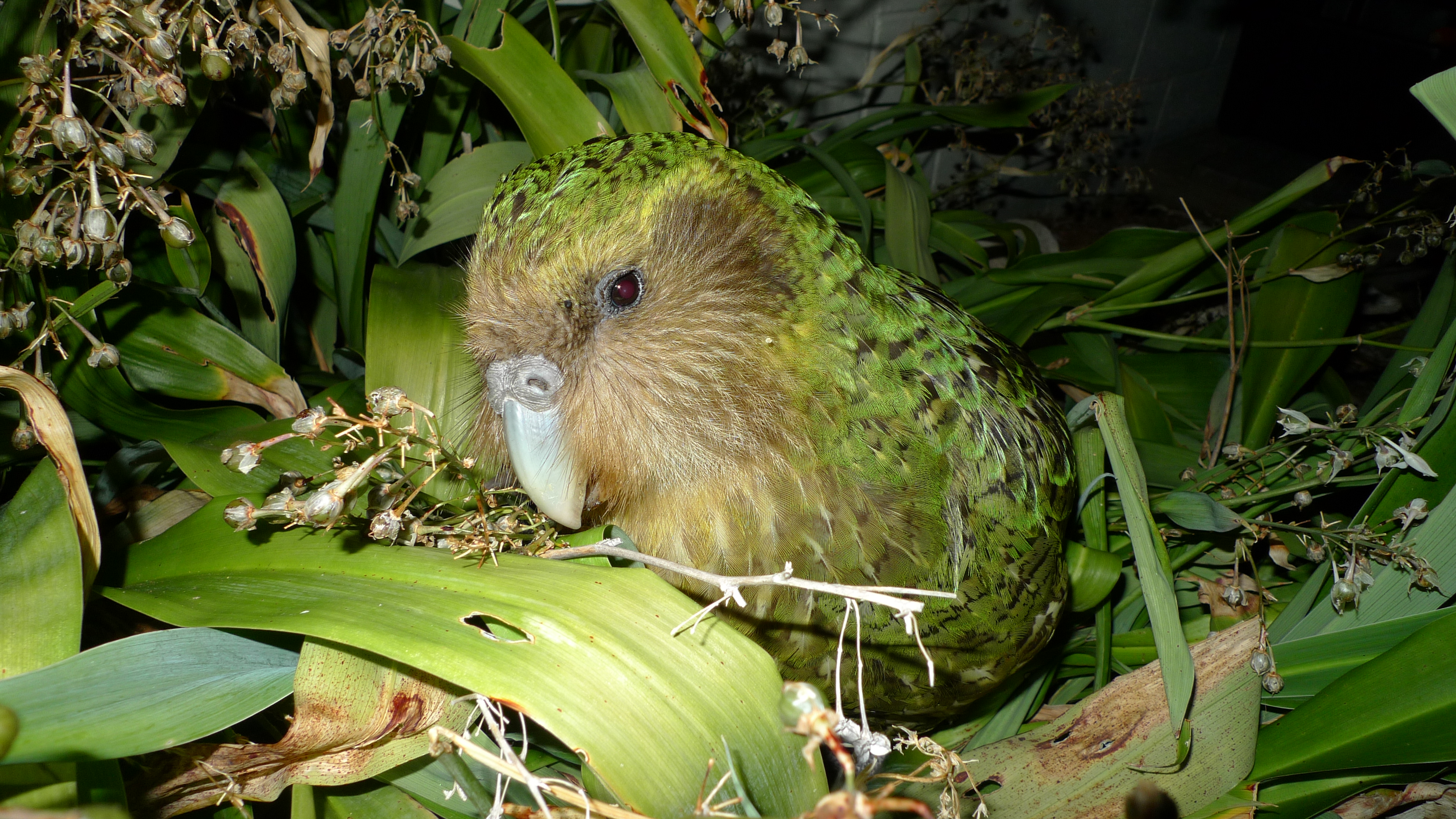
Common name: Kakapo
Scientific name: Strigops habroptilus
Conservation status: Critically Endangered
Primary range: Predator-free islands of New Zealand
Diet: Plants, fruits, seeds, leaves, roots, and other vegetation
About the Kakapo
Native only to New Zealand, the kākāpō is the world’s heaviest parrot and the only flightless parrot in existence. Kākāpōs can live for up to 100 years, making them one of the longest-living bird species.
The kākāpō is culturally significant to Māori, the Indigenous people of New Zealand, and appears in many of their traditional legends and folklore. In addition, kākāpōs were used as a resource by Māori for their meat and feathers, which were used to make expensive clothing.
Habitat and Range
Kākāpō were once widespread across mainland New Zealand before humans inhabited the area. They were so plentiful that they were once one of the most common bird species in New Zealand.
During the 1980s and 1990s, all remaining kākāpō were transported to Whenua Hou/Codfish Island, Maud Island, and Hauturu/Little Barrier Island to protect the species. Today, kākāpō are found only on protected offshore islands and at the fenced mainland sanctuary of Sanctuary Mountain Maungatautari.
Habitat Characteristics:
- Protected forest sanctuaries
- Wide range of habitats including protected offshore islands
Physical Characteristics
Being the heaviest species of parrot, male kākāpō weigh up to 8.8 lbs, while females weigh up to 5.5 lbs. Kākāpō are strong hikers and climbers and can use their hooked bills, a common physical characteristic of parrots, to climb heights of up to 65 feet.
Common physical attributes:
- Short wings
- Facial disc of fine feathers similar to an owl
- Moss-green coloration
Diet and Behavior
Kākāpō are herbivores with a diet that varies from season to season. Although they consume leaves, stems, and roots, kākāpō mainly feed on the fruit of the rimu tree.
Behavior:
- Nocturnal foragers
- Freeze when disturbed or faced with danger
- Use their coloration for camouflage
Major Threats
Human civilization was one of the primary factors in the decline of the kākāpō population. During the 19th century, the kākāpō’s habitat and population were negatively impacted by farming and other human activities.
Threats Kākāpos Face:
- Clearing of vegetation
- Hunting
Conservation Efforts
Multiple conservation efforts have been undertaken to protect the kākāpō population. For example, kākāpō have been transferred to predator-free nature reserves and have recently been returned to mainland New Zealand in a protected forest reserve.
Conservation Efforts That Have Been and Can Be Taken:
- Conducting expeditions to locate remaining kākāpō
- Transferring kākāpō to offshore island sanctuaries
Why the Kakapo Matters
The kākāpō are regarded as highly valued by the Māori of New Zealand’s South Island. The Māori even kept kākāpō as pets and considered them affectionate animals.
Historically, kākāpō have appeared in many ancient Māori tales and have a deeply intertwined history with the Māori people. In addition, the kākāpō were viewed as a valuable resource for food and clothing.
Conservation Challenges
The kākāpō’s diminished population has contributed to the spread of disease, which has further affected population growth. Certain diseases have caused infertility by producing inflammation of the reproductive and digestive tracts.
Challenges They Face:
- Rats heavily consuming kākāpō eggs and chicks
- Stoats
- Cats