Green Sea Turtle
Scientific name: Chelonia mydas
Endangered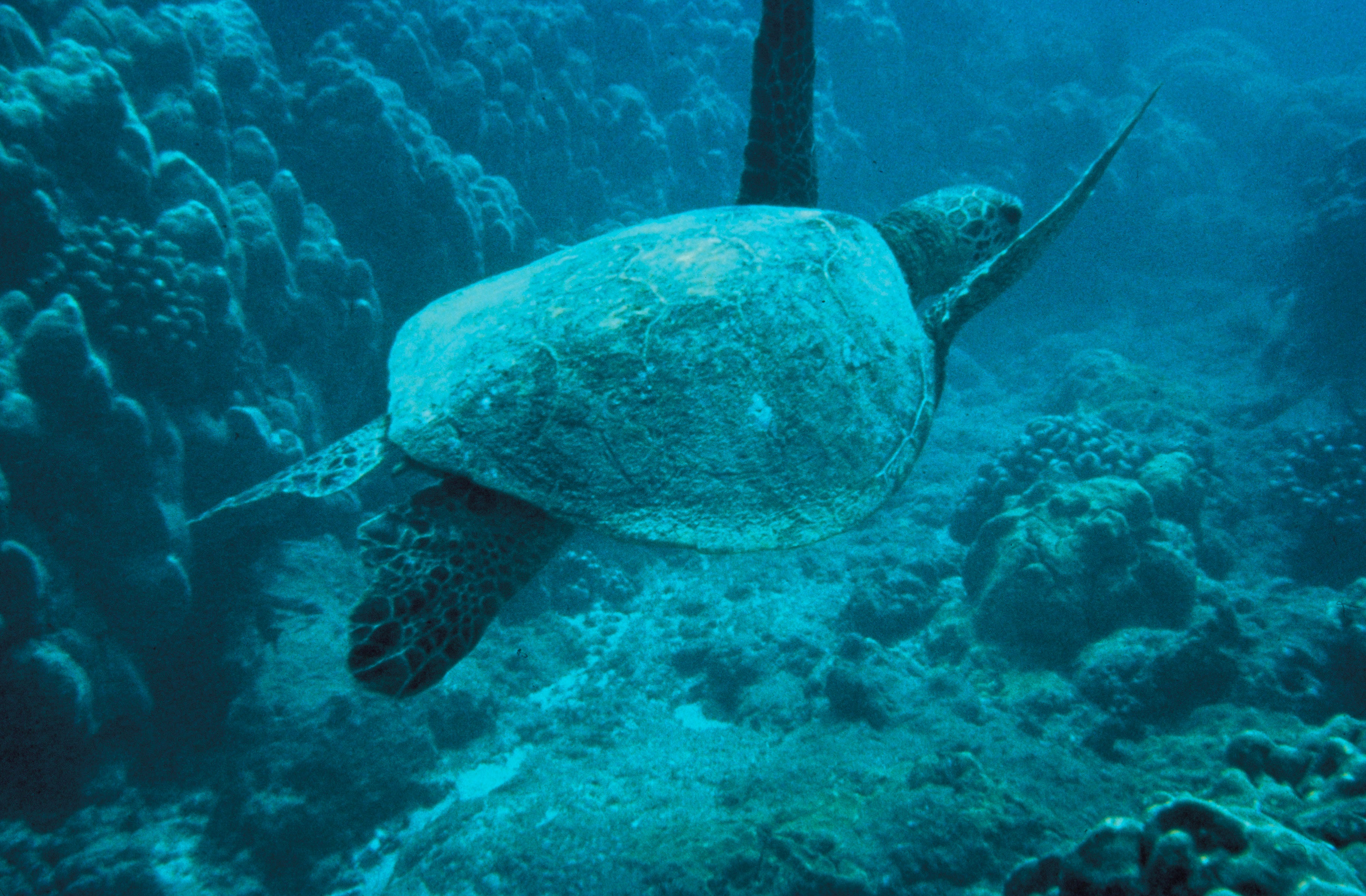
Common name: Green Sea Turtle
Scientific name: Chelonia mydas
Conservation status: Endangered
Primary range: Tropical and subtropical oceans worldwide
Diet: Seagrasses, algae, and other marine vegetation
About the Green Sea Turtle
As one of the world’s largest species of turtle, green sea turtles are 3 to 4 feet long and weigh 250 to 400 pounds. Green sea turtles get their name from the layer of green fat underneath their shells.
Researchers believe this green fat is caused by their plant-based diet. Green sea turtles eat marine plants such as seaweed and seagrass, which is different from the diet of most other sea turtles.
Habitat and Range
Green sea turtles are found all around the world. In more than 80 countries, you can find them along coastlines. The largest nesting populations are found in Costa Rica and Australia.
Leatherback and loggerhead turtles share the green sea turtle’s penchant for migrating long distances. Green sea turtles travel more than 1,600 miles when moving between their feeding grounds and mating and nesting sites.
Habitat Characteristics:
- Tropical and subtropical waters
- Along continental coasts
Physical Characteristics
Young green sea turtles have dappled or sunburst-like patterns on their shells and are often mistaken for hawksbill sea turtles. Adult green sea turtles’ shells can be dark brown, green, olive, yellow, and black. They have five scutes running down the middle and four scutes on each side.
Common physical attributes:
- Strong, tear-drop shape shell, called a “carapace”
- Two large scales between their eyes
- Serrated edges of their beaks
Diet and Behavior
As the only herbivores among sea turtle species, green sea turtles primarily consume algae and seagrasses. However, the East Pacific green sea turtle typically eats more animal prey than any other green sea turtle population.
Behavior:
- Solitary, night-time nesters
- Return to land to lay their eggs on sandy beaches
- Every 2-5 years, adults migrate to the waters off the nesting beaches where they originally hatched to reproduce
Major Threats
Currently, green sea turtles are an endangered species facing many threats to their survival. They have been classified as endangered on the IUCN Red List for over 40 years. Furthermore, three of the world's seven sea turtle species are listed as critically endangered.
Threats Green Sea Turtles Face:
- Bycatch in fishing gear
- Vessel strikes
- Ocean pollution
Conservation Efforts
NOAA Fisheries is working to document and reduce bycatch in commercial and artisanal fisheries. Modifications to fishing gear and practices have been implemented to reduce bycatch and related injuries.
Conservation Efforts That Have Been and Can Be Taken:
- NOAA Fisheries has developed Turtle Excluder Devices (TEDs) to reduce the mortality of sea turtles bycaught in shrimp trawls
- America has banned the importation of shrimp harvested in a manner that adversely affects sea turtles
Why the Green Sea Turtle Matters
By grazing on seagrasses and algae, green sea turtles help maintain seagrass beds and make them more productive. Many plant and animal species that live in seagrass habitats benefit from the recycled nutrients provided by the seagrass that green sea turtles consume.
Seagrass beds also provide habitats for many invertebrates and fish that are highly valued by commercial fisheries. Green sea turtles themselves are also highly valued, generating $6.7 million per year in tourism revenue in Costa Rica.
Conservation Challenges
The only species of sea turtle that is not listed as endangered is the flatback, which is due to a lack of data about the species. Unfortunately, due to the numerous threats they face, six out of the seven species of sea turtles are classified as endangered.
Challenges They Face:
- Changing environmental conditions
- Marine debris
- Overharvesting and illegal trade
Sources
National Geographic Kids — Green Sea Turtle Facts
NOAA Fisheries — Green Turtle: Conservation & Management
Washington Department of Fish & Wildlife — Green sea turtle
International Fund for Animal Welfare — Green turtles
Sustainable Travel International — The Importance of Sea Turtles and Responsible Turtle Tourism