Gharial
Scientific name: Gavialis gangeticus
Critically Endangered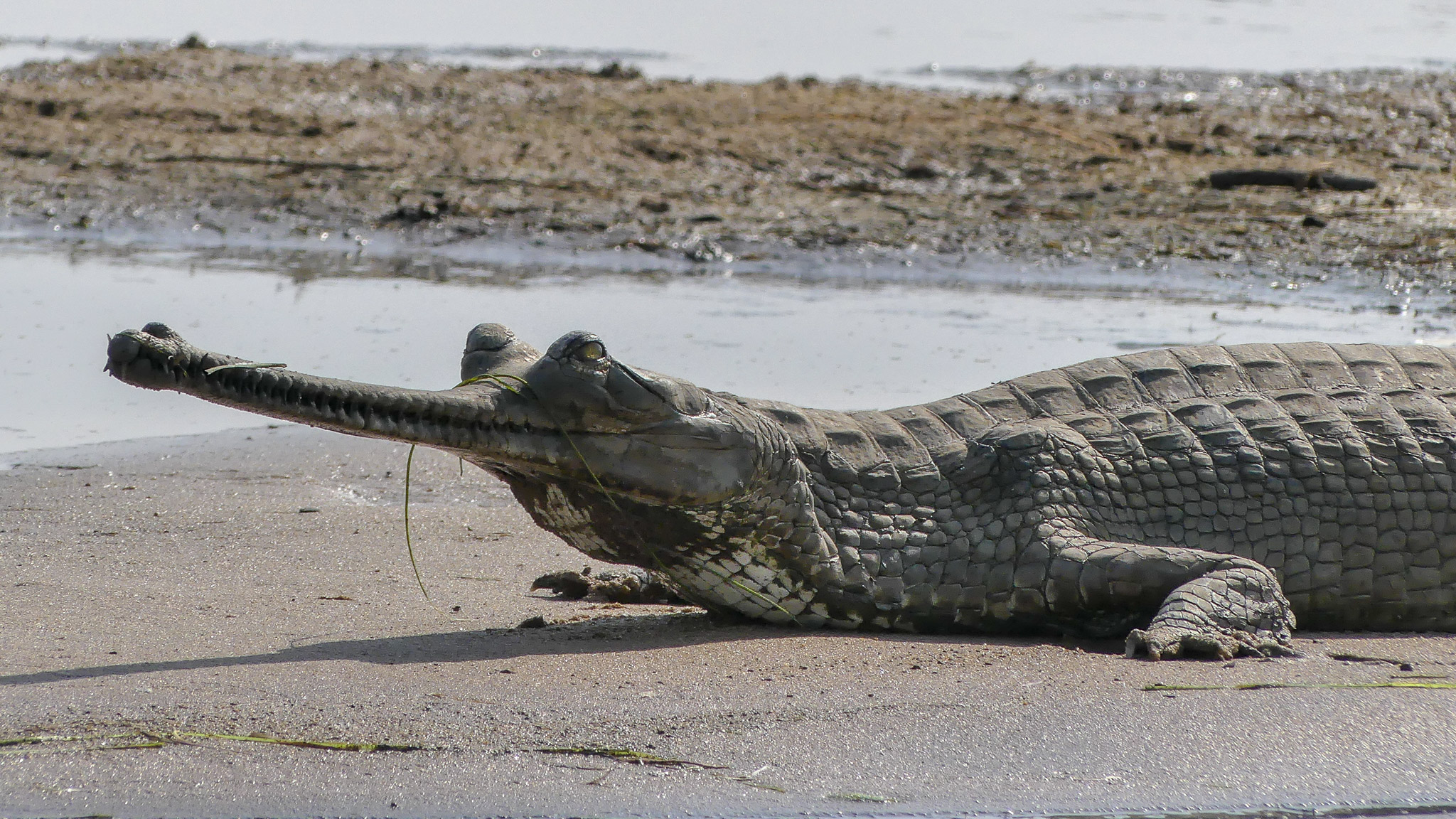
Common name: Gharial
Scientific name: Gavialis gangeticus
Conservation status: Critically Endangered
Primary range: Northern Indian subcontinent
Diet: Primarily fish
About the Gharial
One of the largest crocodilians, gharials can grow up to 20 feet long and weigh up to 400 pounds. Although they have difficulty moving on land, gharials are excellent swimmers and move differently from other reptiles.
Male gharials are the only crocodilians with knobs at the tips of their snouts. These knobs, which begin to grow when male gharials are around 10 years old, can be used to produce a buzzing noise.
Habitat and Range
Historically, gharials were found in India, Pakistan, Nepal, Bangladesh, Bhutan, and Myanmar, but they are now mainly found in India and Nepal. A few gharials have been observed in Bangladesh, but the species is now extinct in many areas.
Gharials are found in small, isolated populations in the river drainages of northern India. Three tributaries of the Ganges River—the Girwa and Chambal Rivers in India and the Rapti-Narayani River in Nepal—contain gharial populations.
Habitat Characteristics:
- Large rivers
- Sandy banks
- Thick vegetation in the water
Physical Characteristics
As the most aquatic crocodilian, gharials have webbed hind feet, laterally compressed tails, and cannot lift their bodies off the ground. Their thick skin is covered with smooth epidermal scales that do not overlap.
Common physical attributes:
- Weak legs
- Olive or light tan color with darker bands along back and tail
- Very narrow, long snout
Diet and Behavior
Juvenile gharials eat insects, crustaceans, and fish, while adults consume fish almost exclusively, as well as aquatic frogs. As a gharial ages, its snout becomes thinner and longer, making it easier for it to catch fish.
Behavior:
- Front of body and head slowly sweeps through the water back and forth looking for food
- Sometimes swallows small stones to help with grinding up food
- Sits and waits for prey
Major Threats
Since the 1940s, the gharial population has decreased by as much as 98%. The loss of river habitats is the biggest threat to gharials today. The construction of dams has made it more difficult for gharials to reach new rivers.
Threats Gharials Face:
- Farming
- Fishing
- Sand mining
Conservation Efforts
In the 1970s, gharials came close to becoming extinct, but several conservation efforts have been undertaken to prevent this. Despite these efforts, the number of gharials decreased by 58 percent between 1997 and 2006.
Conservation Efforts That Have Been and Can Be Taken:
- Indian government granted full protection to gharials in the 1970s
- Conservation groups began reintroduction and breeding programs in India and Nepal
Why the Gharial Matters
By eating dead animals, gharials help keep rivers clean. This, in turn, keeps the water fresh for other creatures, removes rotting matter, and helps prevent the spread of disease.
As gharials swim and hunt, they move nutrients from the bottom of the river to the top and from the top to the bottom. This movement helps keep food available for tiny plants, large fish, and other river creatures.
Conservation Challenges
The effort to protect gharials has not been an easy one. Barrages and dams separate river habitats and cut off migration routes for gharials. In addition, sudden water releases during the monsoon wash away hatchlings and eggs, leaving them with little chance of survival.
Challenges They Face:
- Livestock grazing
- Overfishing