Blue Whale
Scientific name: Balaenoptera musculus
Endangered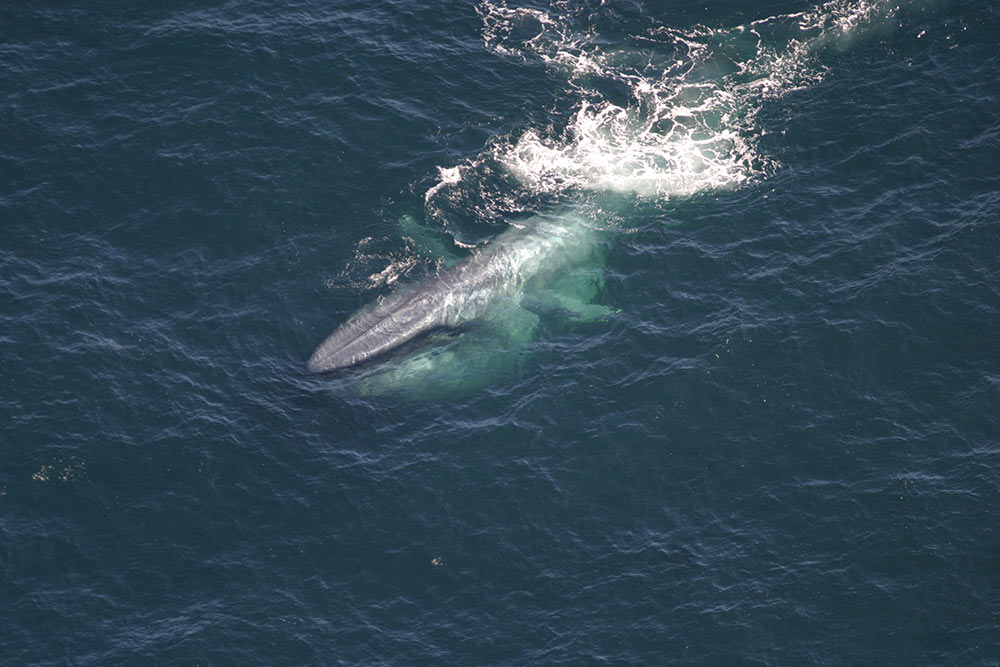
Common name: Blue Whale
Scientific name: Balaenoptera musculus
Conservation status: Endangered
Primary range: Oceans worldwide
Diet: Mostly krill and other small crustaceans
About the Blue Whale
Growing as long as 100 feet and weighing up to 200 tons, blue whales are the biggest animals to have ever lived. They are so enormous that their hearts are about the size of a Volkswagen Beetle.
They are also the loudest animals on Earth. A blue whale’s call is louder than a jet engine and can reach 188 decibels. Blue whales use their calls for navigation and communication. By listening to how their calls bounce off mountains and ravines, they can construct mental maps of their surroundings.
Habitat and Range
Blue whales can be found in all oceans except the Arctic. During the winter, they migrate to tropical waters to mate and give birth.
Despite having such a large habitat, it is uncommon to come across a blue whale. This is due to their endangered status and the fact that they are not commonly found near the coast.
Habitat Characteristics:
- Waters where krill are concentrated
- Offshore waters
Physical Characteristics
All blue whales have long, streamlined bodies. Female blue whales are typically larger than males. Each blue whale has a rostrum, or snout, that is broad, flat, and U-shaped, extending almost all the way to the blowhole.
Common physical attributes:
- Wide head
- Some have a yellowish underside
- Small dorsal fin
Diet and Behavior
Although commonly found alone or in pairs, blue whales occasionally travel in small groups. Krill is a major part of a blue whale’s diet, but fish and copepods are also consumed from time to time.
Behavior:
- Swim approximately 5 mph when feeding and traveling
- Filter-feeders
- Eat up to 40 million krill per day
Major Threats
Despite a worldwide hunting ban introduced in 1966, the blue whale population has declined by 70–90 percent over the past 150 years. Approximately 10,000–25,000 blue whales remain in the wild, and they are now classified as an endangered species.
Threats Blue Whales Face:
- Whaling
- Noise pollution
- Ship strikes
- Fishing ropes and fishing nets
Conservation Efforts
NOAA Fisheries created the Blue Whale Recovery Plan to protect the blue whale species and reduce its conservation status from endangered to threatened. The main initiative of the Recovery Plan is to maintain the international ban on commercial whaling that was established in 1986.
Conservation Efforts That Have Been and Can Be Taken:
- Coordinate federal and international measures to maintain international regulation of whaling
- Determine blue whale population structure, taxonomy, and range
- Protect habitats that are important to blue whales
Why the Blue Whale Matters
Blue whales bring balance not only to ocean ecosystems but also to the planet. They help regulate the climate by promoting phytoplankton growth at the ocean’s surface, which captures approximately 37 billion tons of CO₂ each year.
They also help prevent the overgrowth of krill in the ocean by consuming massive amounts of it each day. In addition, whale watching is a billion-dollar industry that helps boost coastal economies around the globe.
Conservation Challenges
Commercial whaling is now less of a threat to blue whales than it was in the past; however, they still face many challenges in the wild. Some of these challenges are caused by humans, such as blue whales becoming entangled in and injured by fishing gear. Many organizations are working to help blue whales overcome these challenges.
Challenges They Face:
- Habitat loss
- Climate change
Sources
International Whaling Commission — Blue Whale
International Fund for Animal Welfare — Blue Whales
National Geographic Kids — 10 Blue Whale Facts
NOAA Fisheries — Blue Whale: Conservation & Management
World Wildlife Fund— What’s the biggest animal that has ever lived? Fascinating blue whale facts